Samsung is a regular exhibitor at the Society for Information Display (SID) Display Week and this year is no different. Hosted at the Los Angeles Convention Center in California, Samsung Display is showcasing some innovating displays that will be a part of many innovative devices in the future.
Flex Chroma Pixel: 3,000 Nits and BT.2020-96 Color Coverage
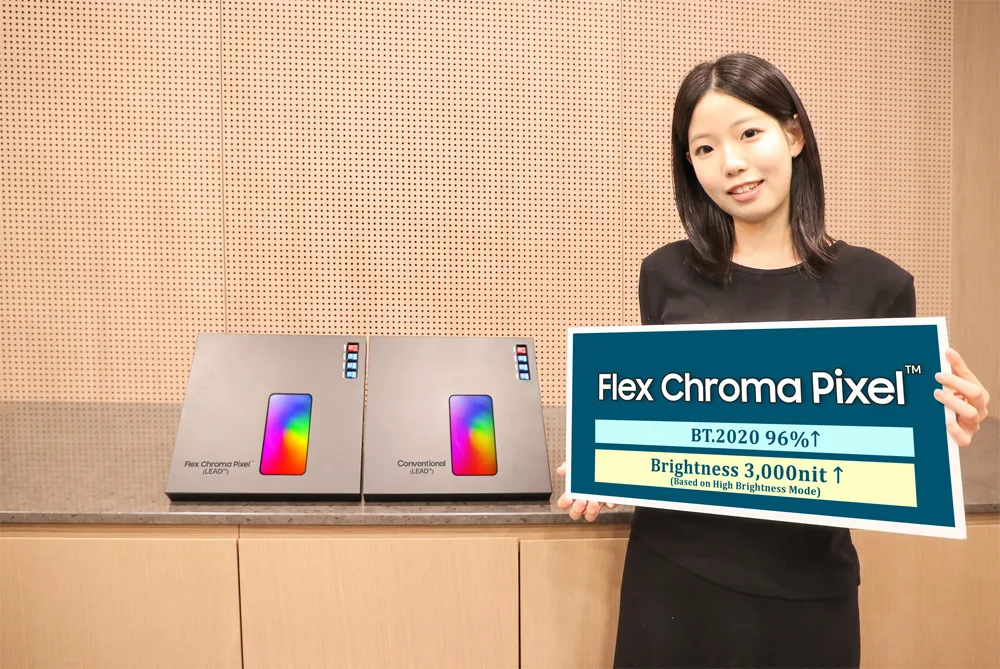
First up, the Flex Chroma Pixel, a smartphone OLED panel that reaches 3,000 nits in High Brightness Mode while covering 96% of the BT.2020 color space. Most commercially available smartphone displays currently cover around 70% of BT.2020. The panel uses phosphorescent sensitized fluorescence (PSF) as an emissive material and incorporates LEAD, Samsung Display’s polarizer-free OLED technology, to achieve high brightness without reducing organic material lifetime.
Sensor OLED Display: 500 PPI with Built-In Privacy
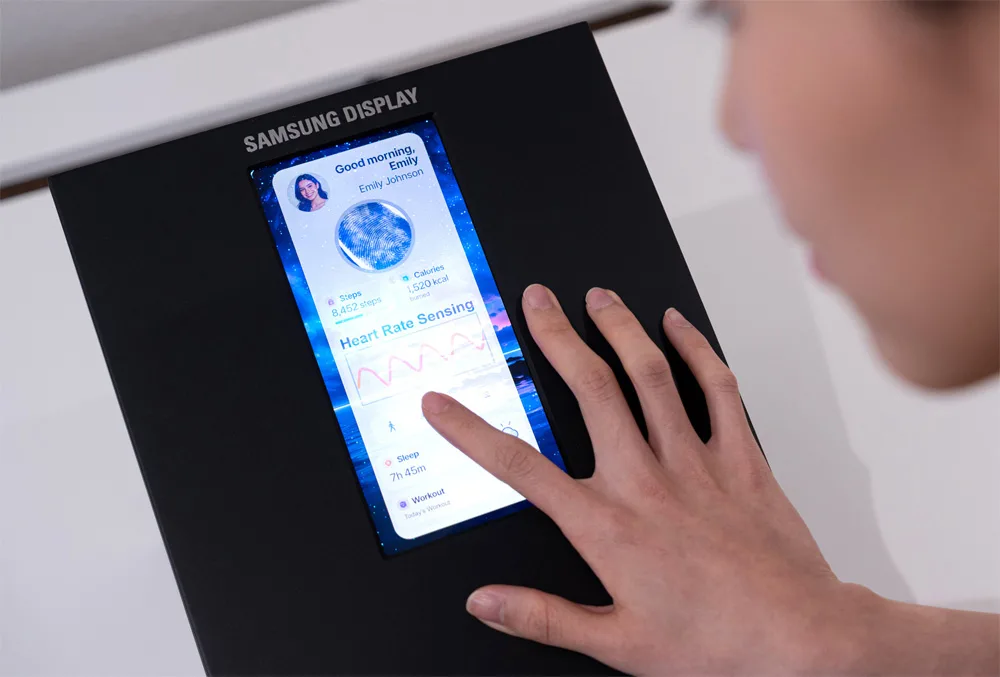
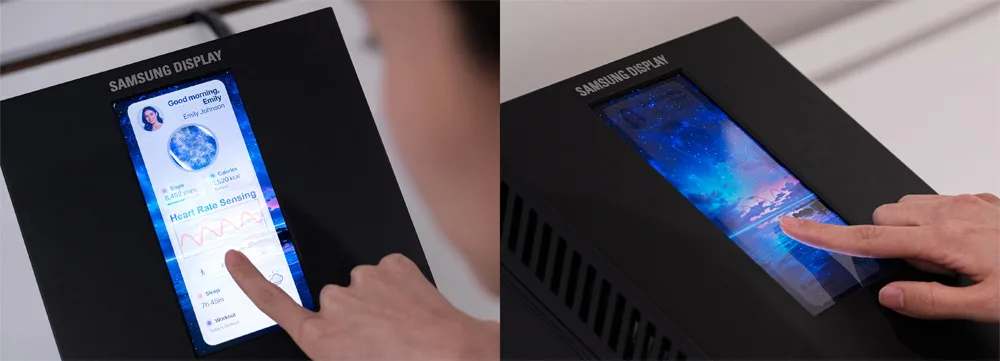
Samsung Display also showcased a 6.8-inch Sensor OLED Display with 500 PPI resolution, up 33% from the 374 PPI version shown at Display Week 2025. The panel integrates Organic Photodiodes (OPD) alongside OLED elements to measure biometric data – heart rate and blood pressure – through blood flow detection. This year’s version adds Flex Magic Pixel (FMP), a privacy technology that conceals sensitive on-screen data from side angles while keeping background content visible.
EL-QD: The 500 Nits Quantum Dot Display

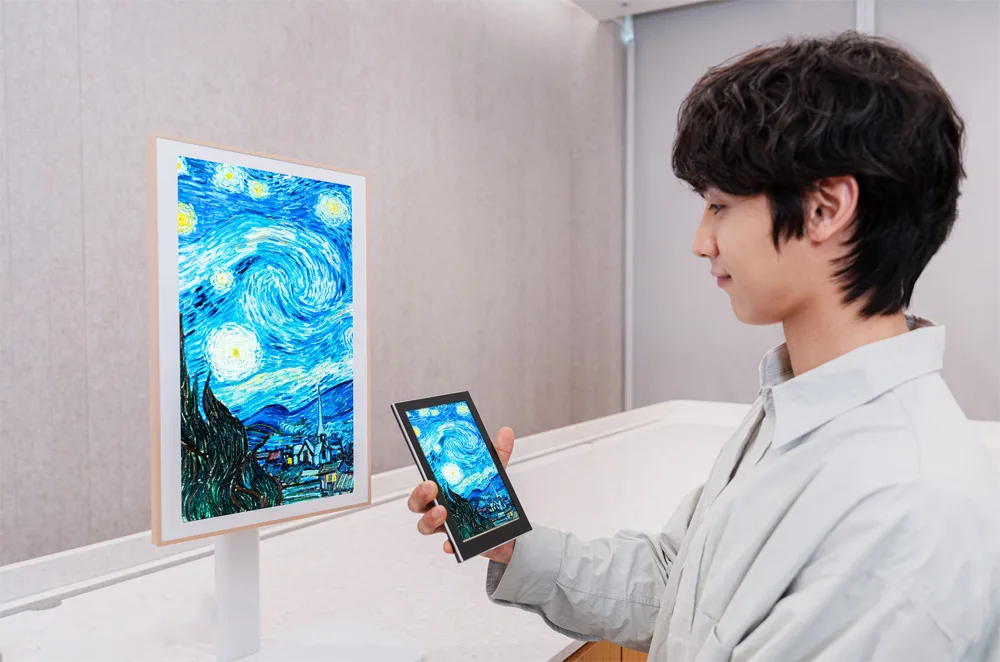
Samsung Display showcased two EL-QD prototypes: an 18-inch panel at 500 nits and a 6.5-inch panel at 400 nits, representing brightness gains of 25% and 33% respectively over last year. EL-QD is a quantum dot display technology where pixels emit light directly via electrical signals without OLED.
Stretchable Display 2.0: 200 PPI for Automotive Applications

The final piece of the display puzzle is the micro LED-based stretchable display designed as an automotive instrument cluster that achieves 200 PPI – 67% higher than the 120 PPI model shown last year. The display features a speedometer that expands and contracts according to driving conditions. Samsung Display noted that current automotive displays typically operate at around 200 PPI, indicating this prototype is near commercialization readiness.
Leave a Reply